
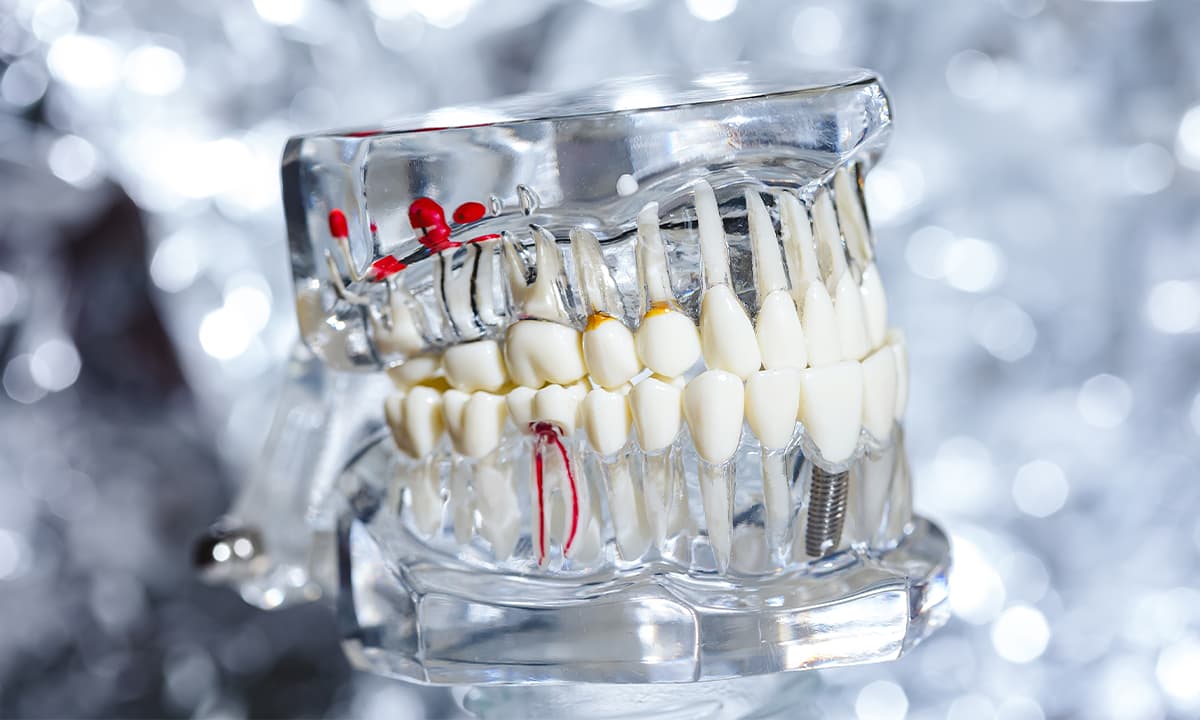
What is root canal treatment?
The pulp tissue can be irreversibly damaged by decay, trauma, deep fillings or advanced gum disease. Symptoms may include sensitivity to hot or cold, pain on biting or spontaneous throbbing. During root canal treatment, infected pulp is removed, canals are cleaned and shaped, and then sealed with a filling material.
This removes the infection while preserving the tooth roots and chewing function. Successful outcomes depend on accurate diagnosis, imaging, quality materials and careful clinical technique.
Single-Canal Teeth Treatment
Front incisors and canines typically have a single root and canal. Treatment is often more straightforward but still requires precision, especially after trauma-related discoloration.
Key steps in single-canal treatment:
- Local anesthesia for a painless procedure
- Cleaning decay and accessing the pulp chamber
- Determining canal length with radiographic or electronic methods
- Cleaning and shaping with files and irrigants
- Three-dimensional filling of the canal system
- Reinforcing the tooth with a composite filling or crown
Properly treated single-canal teeth preserve natural structure and delay the need for more extensive prosthetic solutions.
Multi-Canal Teeth Treatment
Molars often have multiple canals with complex anatomy. Treatment requires detailed knowledge and often magnification to locate hidden canals and ensure success.
Key points in planning:
- Identifying each canal and determining working length
- Safe instrumentation in curved or narrow canals
- Effective irrigation to remove infection
- Sealing canals and reinforcing the tooth
Successful treatment in molars preserves chewing balance and prevents unnecessary tooth loss.
Aftercare
Mild sensitivity may occur for a few days after treatment and is typically manageable with prescribed pain relief.
- Avoid very hard foods for the first days
- Maintain regular oral hygiene
- Do not miss follow-up appointments for crown reinforcement
- Contact the clinic if you feel severe pain or swelling
With proper planning and follow-up, root canal treatment preserves teeth for many years.


